The little history of calendars
The history of calendars is the story of civilizations searching for a reliable way to measure time. From the earliest observations of the Sun and the Moon to modern calendars, this historical evolution stretches over more than five thousand years. So, let’s go back in time.
1. Why did we create calendars?
Since the beginning, humans have been trying to measure, understand, and organize time.
Time flows without ever stopping. We can’t slow it down, speed it up, or put it on pause. To meet our needs, we learned to break time into units that allow us to have better control over our lives.
This need came up very early. For the first human societies, keeping track of time was a matter of survival. They had to recognize the return of the seasons, know when certain plants could be harvested, plan hunting periods, and even anticipate climate changes.
Gradually, observing nature made it possible to identify regular cycles: day and night, the phases of the Moon, and the return of the seasons.
This is how the first ways of counting time were born.
2. The first calendars… on bones ?
Long before the calendars we know today, humans already needed to keep track of the passing days.
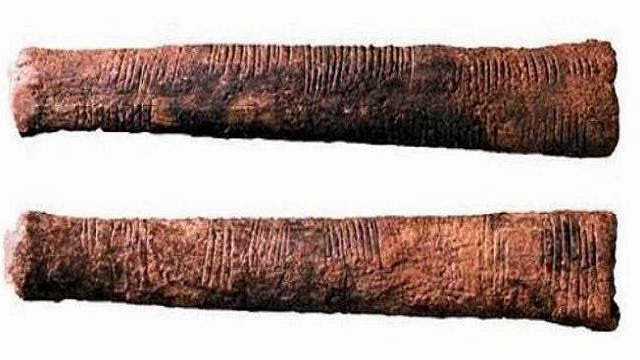
Among the oldest pieces of evidence are bones and animal antlers with sets of regular marks. Found at various prehistoric sites, these objects are sometimes interpreted as possible time-keeping tools.
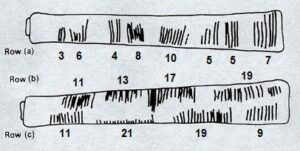
One of the most famous is the Ishango bone, discovered in 1950 in the Lake Edward region of central Africa, now in the Democratic Republic of the Congo. Dated to around 20,000 years ago, it has several series of carefully arranged notches.
What exactly did these marks mean? It’s impossible to say for sure. Some researchers see it as a counting system, while others have proposed interpretations related to moon cycles or mathematical calculations.
One thing is certain, though: these marks show how humans have long wanted to organize and measure their surroundings. Other prehistoric objects with notches have also been found, some even older. They remind us that even before writing and the first calendars, humans were already observing the cycles that shaped their lives. Counting the days was probably one of the first ways to keep track of time.
3. The Mesopotamian Calendar
It was in Mesopotamia, between the Tigris and Euphrates rivers, that some of the first true forms of calendars were found, a little less than five thousand years ago.
The Mesopotamians carefully observed the Moon, the Sun, and the seasons. Their calendar was mainly based on the phases of the Moon: a month began with the appearance of the new lunar crescent and usually lasted 29 or 30 days.
Since twelve lunar months added up to only about 354 days, they regularly had to add an extra month to keep the calendar in line with the seasons. This method, called a lunisolar calendar, made it possible to reconcile the Moon’s cycle with the Sun’s.
The Babylonians gradually improved this system and developed remarkably precise methods for predicting celestial events.
The Mesopotamian calendar was thus one of the first major milestones in the history of measuring time.
4. The Egyptian calendar
The ancient Egyptians developed a calendar that was particularly remarkable for its simplicity and regularity. Used over 4,000 years ago, it was mainly based on the cycle of the Sun and the return of the seasons.
The year had 365 days, divided into 12 months of 30 days, or 360 days. At the end of the year, the Egyptians added 5 extra days, dedicated to religious festivals and associated with several important deities.
This made the calendar much more regular than many calendars that would follow. However, since the actual solar year is slightly longer than 365 days, the Egyptian calendar gradually shifted in relation to the seasons.
For farmers, the calendar was especially useful for tracking the three main periods of the year: the flooding of the Nile, the growth of crops, and the harvest season.
The Egyptian calendar is therefore an important step in the history of how we organize our time.
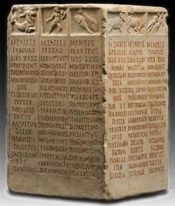
5. The Roman calendar
The Roman calendar went through several changes before becoming the basis of the calendar we still use today.
According to tradition, the first Roman calendar was established under Romulus, the legendary founder of Rome, around the 8th century BC. It supposedly had only ten months, from March to December, for a year of about 304 days.
Since this system was impractical, the calendar was gradually modified. Numa Pompilius, the second legendary king of Rome, is said to have added the months of January and February, bringing the year to twelve months. However, the calendar remained complex and could be adjusted to stay in line with the seasons.
Roman authorities could, in particular, add an intercalary month, which sometimes allowed political considerations to influence the length of the year.
This major irregularity eventually led to a major reform: the Julian calendar, introduced by Julius Caesar in 46 BC.
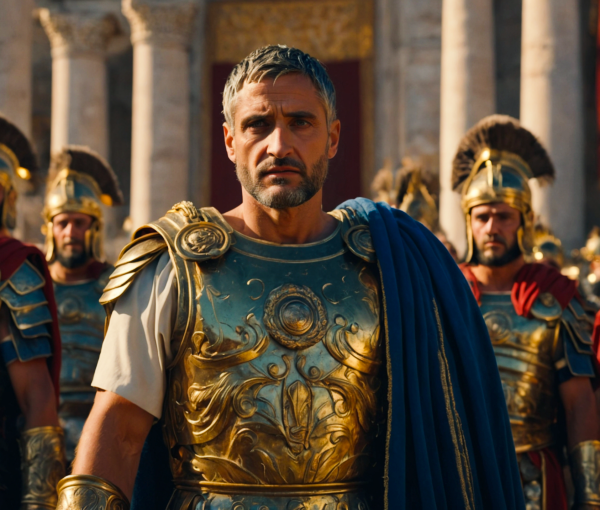
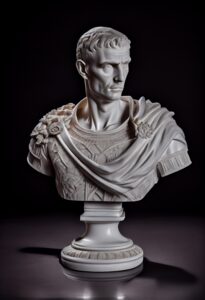
6. The Julian calendar
In the 1st century BC, the Roman calendar had become so irregular that a reform was needed. Julius Caesar decided to reorganize it with the help of the Greek astronomer Sosigenes of Alexandria.
Implemented in 45 BC, the Julian calendar established a year of 365 days, divided into 12 months. To account for the extra quarter of a day in the solar year, a leap day was added every four years, making the year 366 days.
This reform brought great stability to the Roman calendar and gradually set the length of the months that we still know today.
However, the Julian year was slightly too long compared to the actual solar year. The small difference each year added up over the centuries. After more than 1,600 years, the calendar had fallen about ten days behind the seasons.
This drift eventually led to a new reform: the Gregorian calendar, adopted in 1582.
7. The Gregorian calendar
To help fix the errors of the Julian calendar, Pope Gregory XIII sought advice from the Italian astronomer and mathematician Aloysius Lilius (Luigi Lilio). He was the one who came up with the initial design for the calendar reform project.
However, around 1577, Luigi Lilio passed away before the reform he proposed for the Julian calendar was adopted. After his death, Gregory XIII asked Christoph Clavius to take over his work and double-check all the calculations of his predecessor.
It was in 1582 that the Gregorian calendar was adopted. When the Gregorian calendar was adopted, ten days were removed to correct the drift that had accumulated in the Julian calendar since the First Council of Nicaea. So, from Thursday, October 4, 1582, it jumped directly to Friday, October 15, 1582. The days from October 5 to October 14, 1582 never actually existed.
The Julian calendar was a great step forward, but it kept getting out of step with the spring equinox. It was in 1582 that Pope Gregory XIII decided to correct the error of the Julian calendar. He removed ten days from the calendar to realign the spring equinox with 21 March, and corrected the calculation of leap years. The Gregorian calendar is still used today in most countries of the world.
The adoption of the Gregorian calendar
Not all countries adopted the reform in 1582. Some did it much later. For example, Great Britain and its colonies adopted it in 1752, cutting out 11 days (from September 3 to 13), while Russia only switched to the Gregorian calendar in 1918, after the Russian Revolution, skipping 13 days. This gradual adoption explains why some historical dates differ depending on whether you use the Julian or Gregorian calendar.
8. And today ?
Today marks the Arrival of the Modern Calendar
After thousands of years of evolution, calendars have always sought to better organize our relationship with time. The Fixed Modern Calendar offers a new approach based on three simple principles: regularity, simplicity, and predictability.
The year has 13 months of 28 days each, which is exactly four weeks per month. Each month therefore always starts on the same day of the week, and each date always falls on the same day. There is no longer a need to check a different calendar each year to know what day a given date falls on.
The names of the months and days are in Esperanto, an international language designed to facilitate communication between peoples.
To complete the year of 365 days, an additional day called Ĝis « goodbye » is placed at the end of December. This day serves as a festive transition day between the two years.
In leap years, a second extra day, Ferio « holiday, » is added at the end of the seventh month of the year, the month of Mezo. This way, the Modern Calendar offers a new, clearer, and more predictable way to organize our time. So, we can say:
Our time finally under control!

9. Other calendars
Several other calendars have marked history, and some are still used today. Each serves specific needs and is based on its own logic. Here are a few of the main ones:
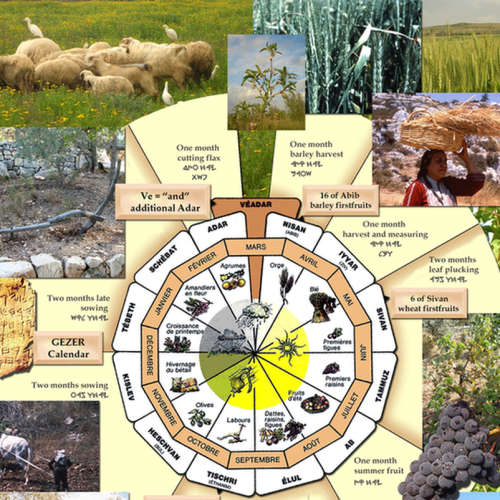
- The Hebrew calendar: a lunisolar calendar used in Judaism. The months follow the phases of the Moon, but an extra month is added in some years to keep the holidays in the same seasons. So it has 12 or 13 months.
- The Islamic calendar: a strictly lunar calendar with 12 months, totaling 354 or 355 days. No leap months are added. Religious holidays, like Ramadan, gradually shift through the seasons.
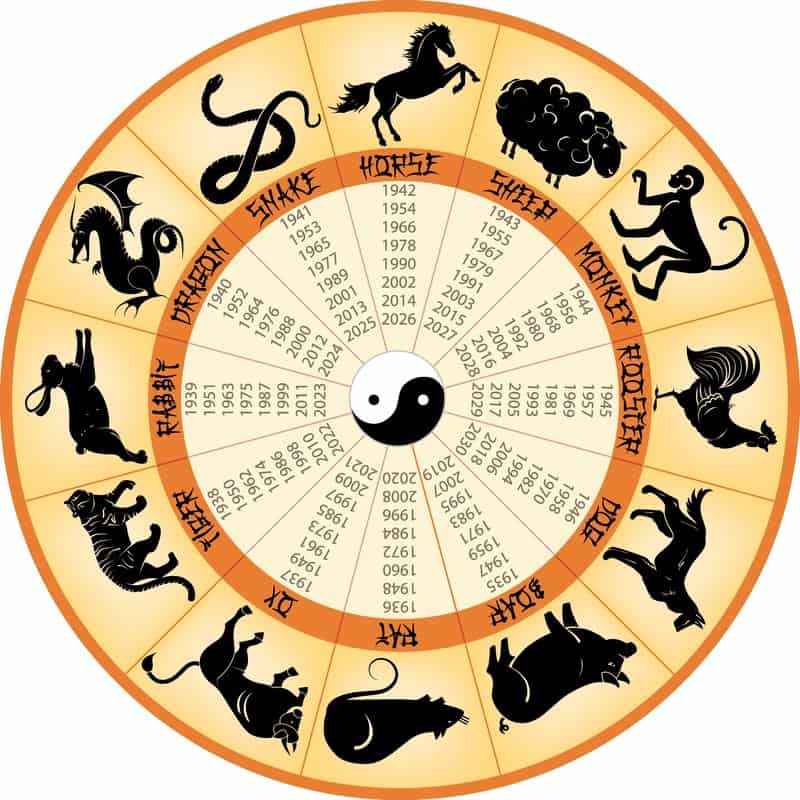
- The Chinese calendar: a lunisolar calendar, mainly used to determine traditional holidays. The months follow the Moon’s cycles, and adjustments are made to keep the calendar in line with the solar year. Chinese New Year is set according to this calendar.
- The Persian or Iranian calendar: a solar calendar where the year begins at the spring equinox. Its method for determining leap years gives it remarkable accuracy compared to the solar year. It is officially used in Iran and Afghanistan.
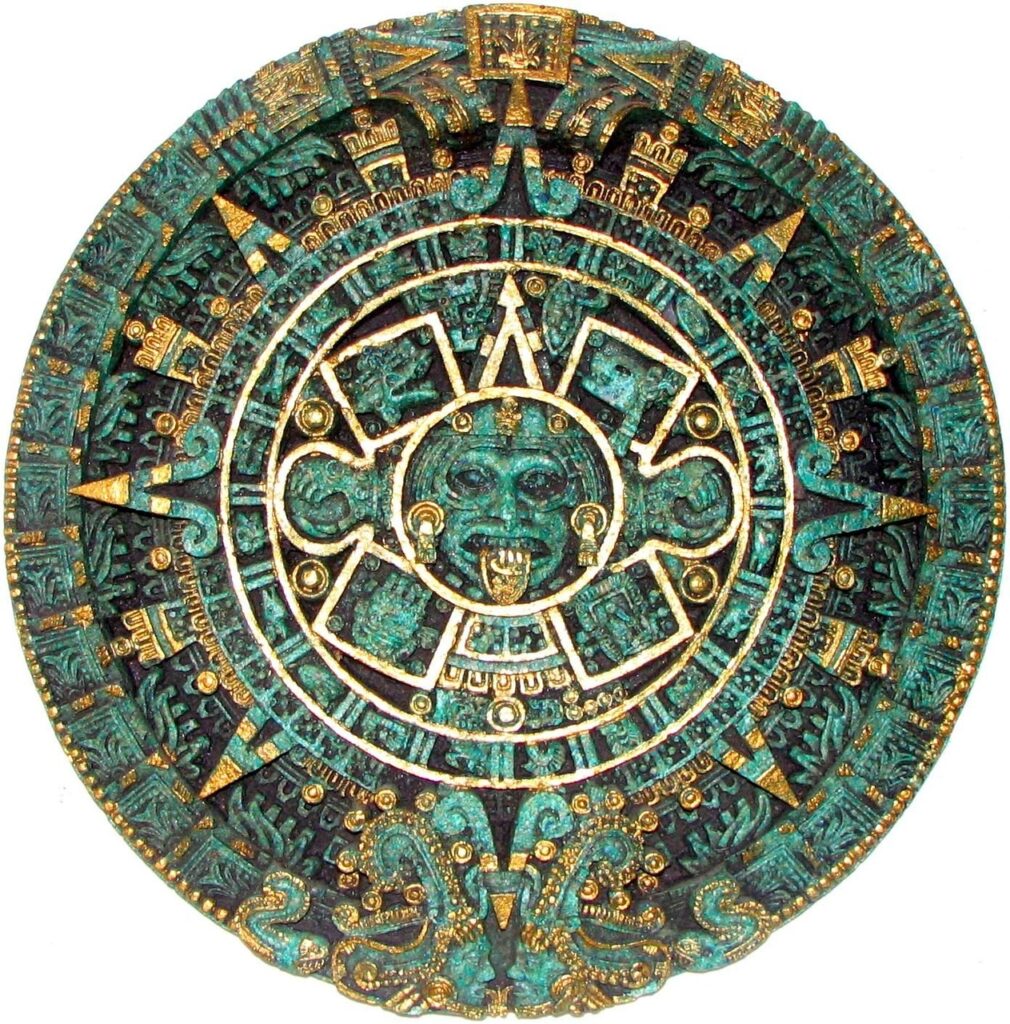
- The Mayan calendar: the Mayan civilization used several systems to measure time. The Tzolk’in had 260 days, while the Haab’ had 365. The Long Count allowed events to be dated over very long periods.
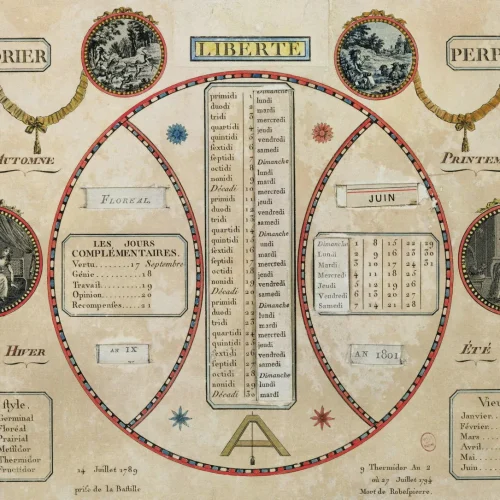
- The French Republican calendar: created during the French Revolution, it had 12 months of 30 days divided into decades, with 5 or 6 additional days. Officially used from 1793 to 1805, it was eventually abandoned, mainly because it was hard to reconcile with the civil and religious habits of the population.
These different calendars show that there isn’t just one way to measure and organize time.Some favor the Moon, others the Sun, while lunisolar calendars try to reconcile the two. Today, the Gregorian calendar has become the main international civil calendar. Yet, several other calendars are still very much alive and continue to play an important role in religious, cultural, and national traditions. This long history also shows that calendars have never stopped evolving. The Fixed Modern Calendar is part of that same aim: thinking about a simpler, more regular, and more predictable way to organize our time.
A few calendars in pictures